
New Perspectives on Human Consciousness as the Brain Activation State
Abstract
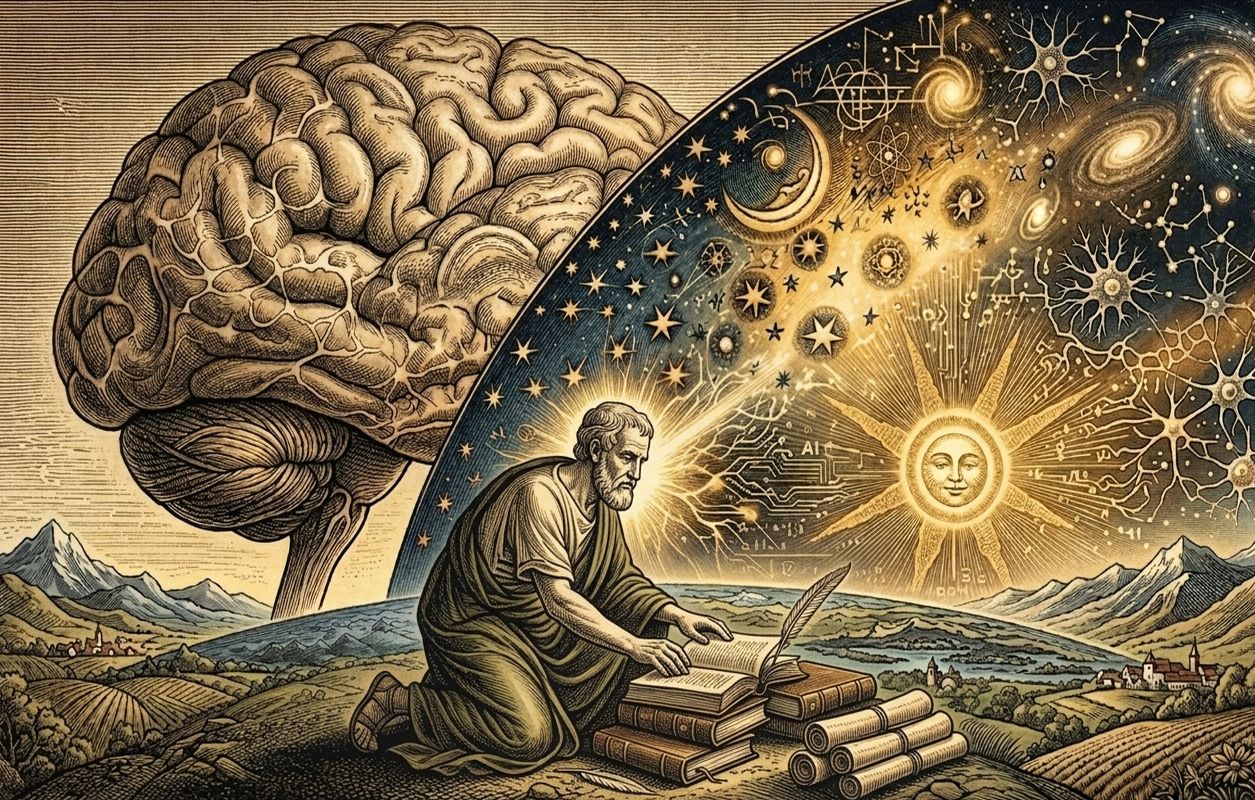
The exploration of the origin and essence of human consciousness has a long history, and although various disciplines—such as philosophy, medicine, sociology, biology, and psychology—have offered different explanations, none has gained widespread recognition to date. This lack of consensus stems primarily from the complexity of consciousness itself, combined with significant disciplinary differences in perspective, which together prevent researchers from fully, reasonably, and comprehensively grasping its essence. Consequently, consciousness remains an enduringly ambiguous subject, making deeper investigation necessary. Based on a systematic analysis, summarization, and synthesis of knowledge across multiple fields, this paper draws the following conclusions: the origin of consciousness lies in natural materials; its essence is material information; and it possesses the attributes of congenitality, materiality, complexity, systematicity, dynamics, differentiation, subjectivity, and selfhood.
Keywords:
Material information, Complexity, Orderliness, Energy, BAS (Brain Active State), AttributesDownloads
Metrics
References
Gesteland RF, Cech TR, Atkins JF. The RNA World. Science Press; 2007.
Hall JE. Guyton and Hall Textbook of Medical Physiology. Peking University Medical Press; 2015.
Koch C. Consciousness: A Neurobiological Approach. Roberts and Company Publishers; 2004.
Lao Tzu. Tao Te Ching. Harper Perennial Modern Classics; 2006.
Lin C, Yang Z, Huang X. Dictionary of Psychology. Shanghai Education Press; 2023.
Downloads
Published
How to Cite
Issue
Section
Categories
License
Copyright (c) 2026 Cheng Gong

This work is licensed under a Creative Commons Attribution-NonCommercial-ShareAlike 4.0 International License.
Authors retain the copyright of their work and grant the journal the right of first publication. This work is licensed under a Creative Commons Attribution NonCommercial ShareAlike 4.0 International License (CC BY-NC-SA 4.0).


