From Philosophy to Physics of the Mind: Teleological Transduction Theory
Abstract
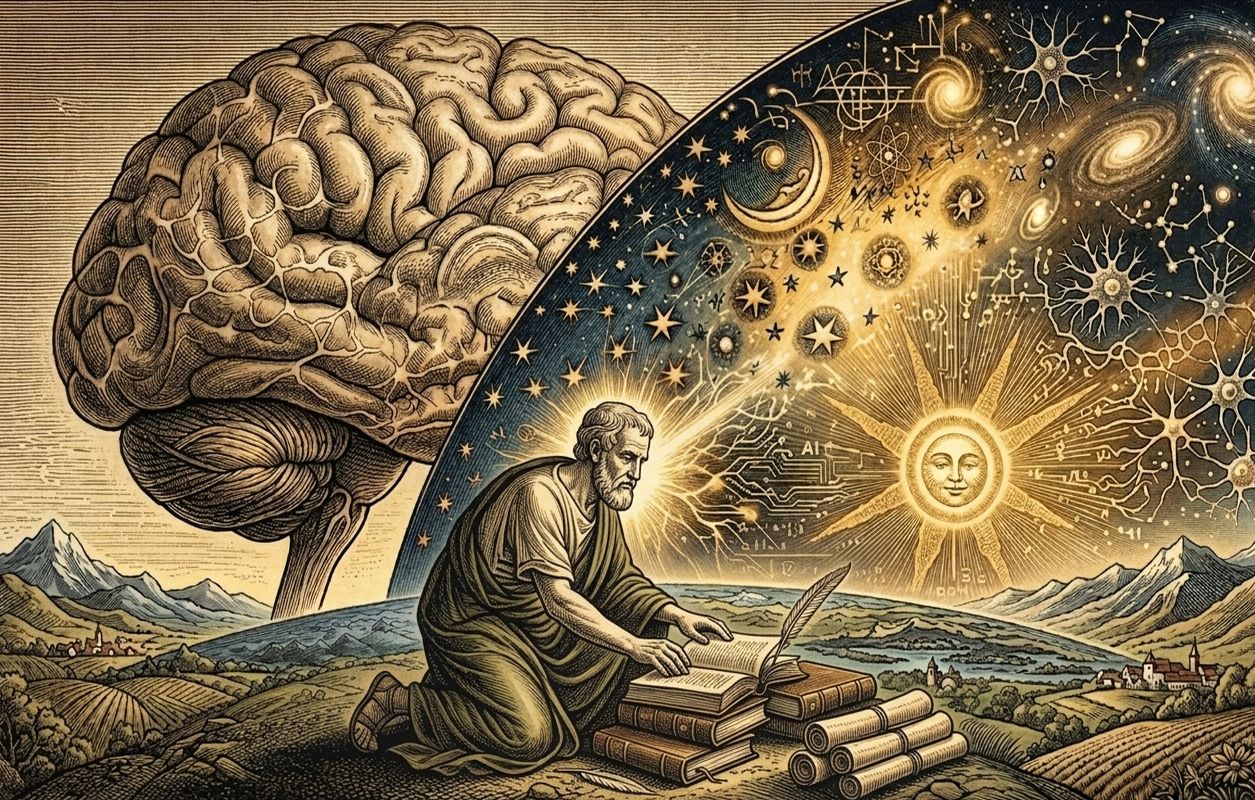
For millennia, the mind-body problem remained a philosophical issue without an empirical basis and practical implications. In recent decades, natural science has finally started to treat the mind as an object of research. The main approach was to study the ‘neural correlates of consciousness’. Since then, we have accumulated a vast amount of data on neural processes that appear to correlate with observed mental phenomena. However, the explanatory gap between mental and physical is not covered, as the main questions about the mind remain unanswered. What is the mind? What does it do? Why does it do it? How does it do it? The article reviews a theory that aims to answer these phenomenological, functional, teleological, and causal questions from a physical perspective. The theory elucidates physical processes and mechanisms that give rise to mental phenomena in the brain, thus enabling neuroscience to progress from correlational descriptions to an explanation of the physical causes of the mind and solve the mind-body problem.
Keywords:
signal processing, neural code, reality model, wave physics, binding problemDownloads
Metrics
References
Chalmers, D. Facing up to the Problem of Consciousness. Journal of Consciousness Studies 1995 Vol.2, № 3: 200-219 doi:10.1093/acprof:oso/9780195311105.003.0001
Crick F, Koch C. Consciousness and neuroscience. Cereb Cortex. 1998 Mar;8(2):97-107. doi: 10.1093/cercor/8.2.97.
Feldman J. The neural binding problem(s). Cogn Neurodyn. 2013 Feb;7(1):1-11. doi: 10.1007/s11571-012-9219-8.
Hodgkin, A., Huxley, A. A quantitative description of membrane current and its application to conduction and excitation in nerve. J Physiol. 1952 Aug;117(4):500-44. doi: 10.1113/jphysiol.1952.sp004764.
Izhikevich, E. Dynamical Systems in Neuroscience: The Geometry of Excitability and Bursting . The MIT Press, Cambridge, MA. 2007. pp. 280-281. ISBN: 9780262276078
Downloads
Published
How to Cite
Issue
Section
License
Copyright (c) 2026 Stanislav Tregub

This work is licensed under a Creative Commons Attribution-NonCommercial-ShareAlike 4.0 International License.
Authors retain the copyright of their work and grant the journal the right of first publication. This work is licensed under a Creative Commons Attribution NonCommercial ShareAlike 4.0 International License (CC BY-NC-SA 4.0).


