
A Neurophilosophical Model of Personal and Meta-reflective Modes of Mind
Abstract
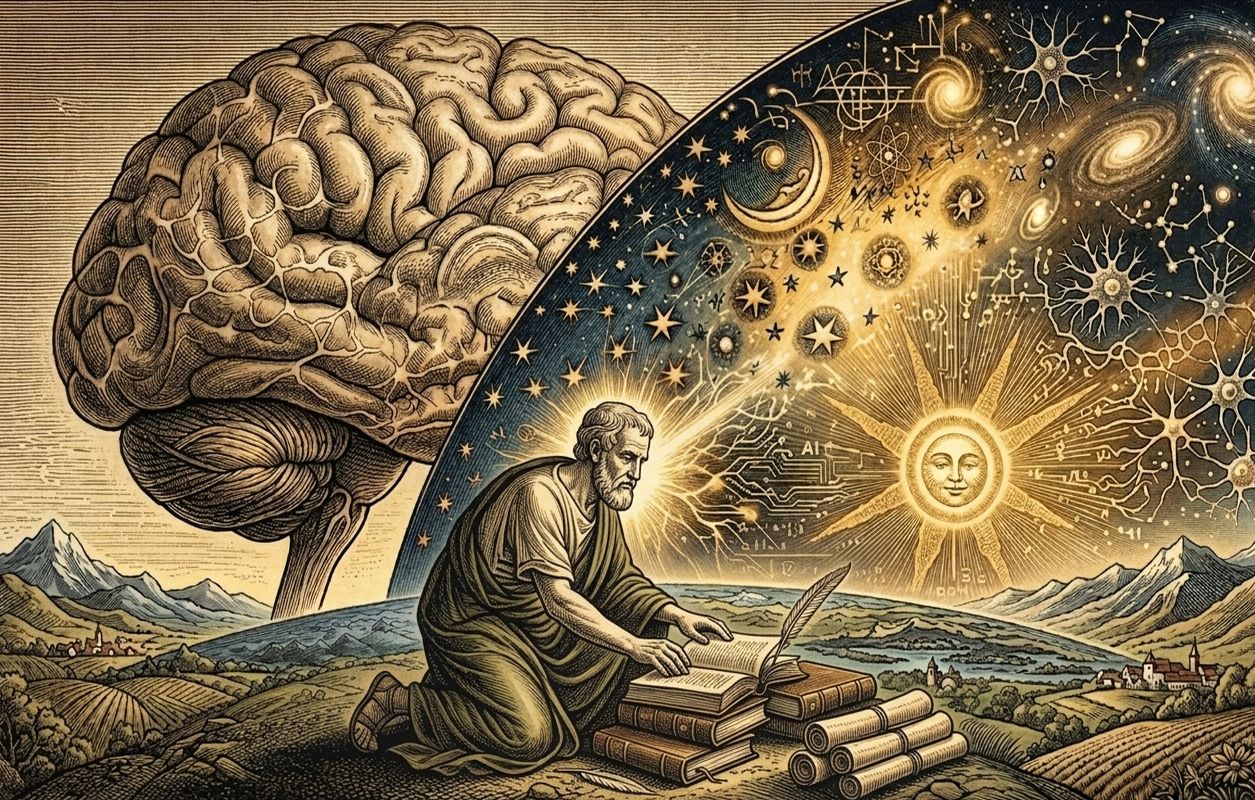
This paper proposes a neurophilosophical conceptual model of human consciousness structured as two functional brain states: the personal mode and the Meta-reflective mode. The personal mode is defined as a motivationally and socially embedded configuration of neural processes oriented toward adaptation, identity maintenance, and ego-relevant concerns. The Meta-reflective mode is characterized as a functional state in which cognition turns upon itself, enabling abstraction, self-objectification, and existential evaluation. The model does not posit a metaphysical dualism nor strictly separable neural systems. Rather, both modes may recruit overlapping brain regions, including prefrontal structures, while differing in dominant functional orientation and hierarchical organization. The distinction is therefore not anatomical but configurational. The current framework suggests that tensions between these modes may account for different categories of psychological crises: identity-based crises, which arise predominantly in the personal mode, and existential crises, which arise as a result of increased activation of the meta-reflexive mode. The framework further suggests that the development of civilization reflects the structural coexistence of adaptive engagement and reflective distancing. Although empirical validation is currently limited, this framework provides a robust integration of phenomenological ana=lysis and neurocognitive theory, offering a novel foundation for investigating the hierarchical organization of consciousness.
Keywords:
neurophilosophy, psychology, neurobiology, sociology, consciousness, neural integration, neuroscience, metacognitionDownloads
Metrics
References
Aristotle. The Complete Works of Aristotle: The Revised Oxford Translation. Barnes J, ed. Vol 2. Princeton University Press; 1984.
Churchland PS. Neurophilosophy: Toward a Unified Science of the Mind-Brain. MIT Press; 1986.
Churchland PS. Touching a Nerve: The Self as Brain. WW Norton & Company; 2013.
Dennett DC. Consciousness Explained. Little, Brown and Company; 1991.
Dennett DC. From Bacteria to Bach and Back: The Evolution of Minds. WW Norton & Company; 2017.
Downloads
Published
How to Cite
Issue
Section
Categories
License
Copyright (c) 2026 Kyrylo Somkin

This work is licensed under a Creative Commons Attribution-NonCommercial-ShareAlike 4.0 International License.
Authors retain the copyright of their work and grant the journal the right of first publication. This work is licensed under a Creative Commons Attribution NonCommercial ShareAlike 4.0 International License (CC BY-NC-SA 4.0).


